
Practical Logistics Strategies for Canada & the U.S.
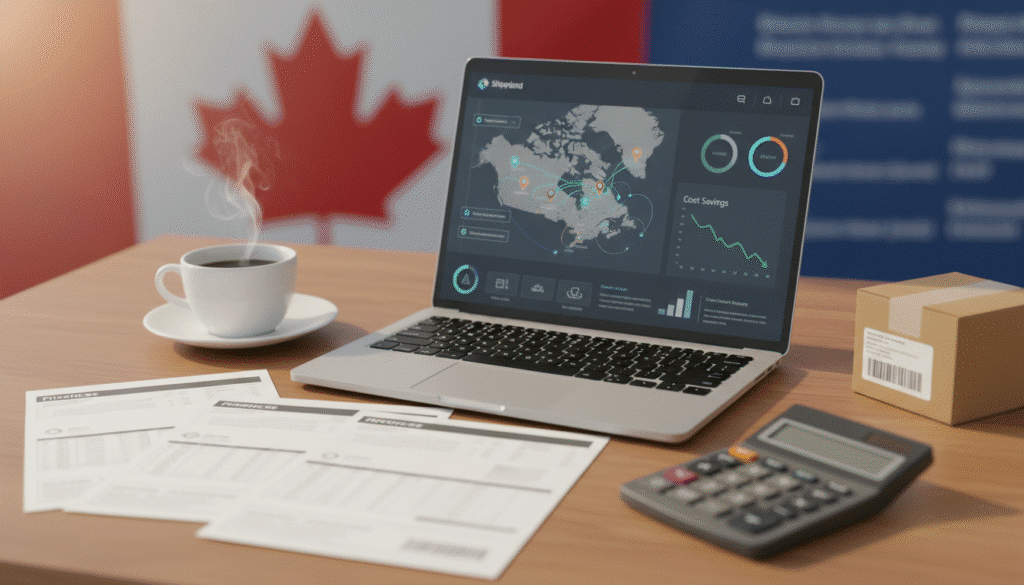
For many small and mid-sized businesses in Canada and the U.S, shipping is one of the biggest and most frustrating operational costs. How to reduce shipping costs is always a big question.
You see carrier rate increases, new surcharges, and cross‑border fees, all while customers still expect fast and affordable delivery. It can feel like you’re stuck between rising costs and rising expectations. Cheap shipping is nowhere to be found.
At Complete Shipping Solutions, we work with businesses across Canada and the U.S. every day to bring those shipping costs under control. Through our SMARTT Shipping platform and our network of carriers, we see exactly where small businesses tend to overspend and where there are real opportunities to save.
This article is Part 1 of our “Mastering Small Business Logistics” series for 2026, where we’ll walk through:
- Shipping costs
- Inventory management and stock control
- Logistics software selection
- Cross-border checklists
- Product-specific challenges (like shipping tires)
Let’s start with the piece most businesses feel first: shipping costs.
Why Shipping Costs Keep Climbing and How to Reduce It
If your monthly shipping spend keeps creeping up, the issue is usually not just “higher rates.” We typically find a mix of:
- Accessorial & surcharges (fuel, residential, remote, oversize)
- Dimensional weight penalties from inefficient packaging
- Service level creep (using faster services than you really need)
- Cross-border friction (brokerage, duties, rework from paperwork issues)
What to look for in your recent invoices and how it might reduce shipping costs.
Break out your cost buckets
- Base freight charges
- Fuel surcharges
- Accessorials (residential, liftgate, limited access, address correction, oversize, etc.)
- Brokerage and cross-border fees (if shipping Canada–U.S.)
Identify patterns
- Are the same accessorials showing up again and again?
- Are certain lanes (e.g., to specific provinces or states) consistently more expensive?
- Are a lot of your shipments billed at dimensional weight instead of actual weight?
Check service levels
- Are you defaulting to express or 2‑day when ground would meet your customers’ expectations?
- Do you have a clear internal rule for when to upgrade service?
How CSS helps here:
Through SMARTT Shipping, our clients can see instant rate comparisons across multiple carriers and service levels for each shipment. On top of that, our team can run a more detailed review of your historical shipments.

Use Buying Power to Get Better Rates
Carriers reward volume. Individually, many small businesses don’t have the leverage to negotiate the best discounts, especially across multiple modes (courier, LTL, FTL, cross‑border) and regions.
As a 3PL and one of Canada’s leading logistics partners, Complete Shipping Solutions consolidates volume across many shippers, which is how we secure exclusive LTL and parcel rates.
Your options as a small business
Negotiate directly (if you have the data)
If you’re going straight to carriers:
- Bring 12 months of shipment data: weights, dimensions, lanes, residential %, and modes.
- Ask for targeted discounts (e.g., key lanes you use most) rather than generic “X% off list.”
- Don’t forget to negotiate on accessorial, not just base rates.
Leverage a 3PL’s consolidated buying power
Working with a 3PL like CSS often unlocks:
- Better courier and LTL rates than you’d access on your own
- Flexible options for domestic, cross-border, and international shipping
- More competitive pricing on challenging lanes or oversized freight
Blend carriers and modes
A single carrier is rarely the cheapest or best fit for every shipment:
- Use courier/parcel for small, lightweight shipments
- Use LTL for palletized or heavier freight that doesn’t need a full truck
- Use domestic vs. cross-border specialists depending on destination
Fix Packaging Before It Hits DIM Weight Rules
Carriers now price many shipments based on dimensional weight (the space a package takes up) instead of just actual weight. This is where packaging decisions quietly drive up cost.
Practical packaging checks
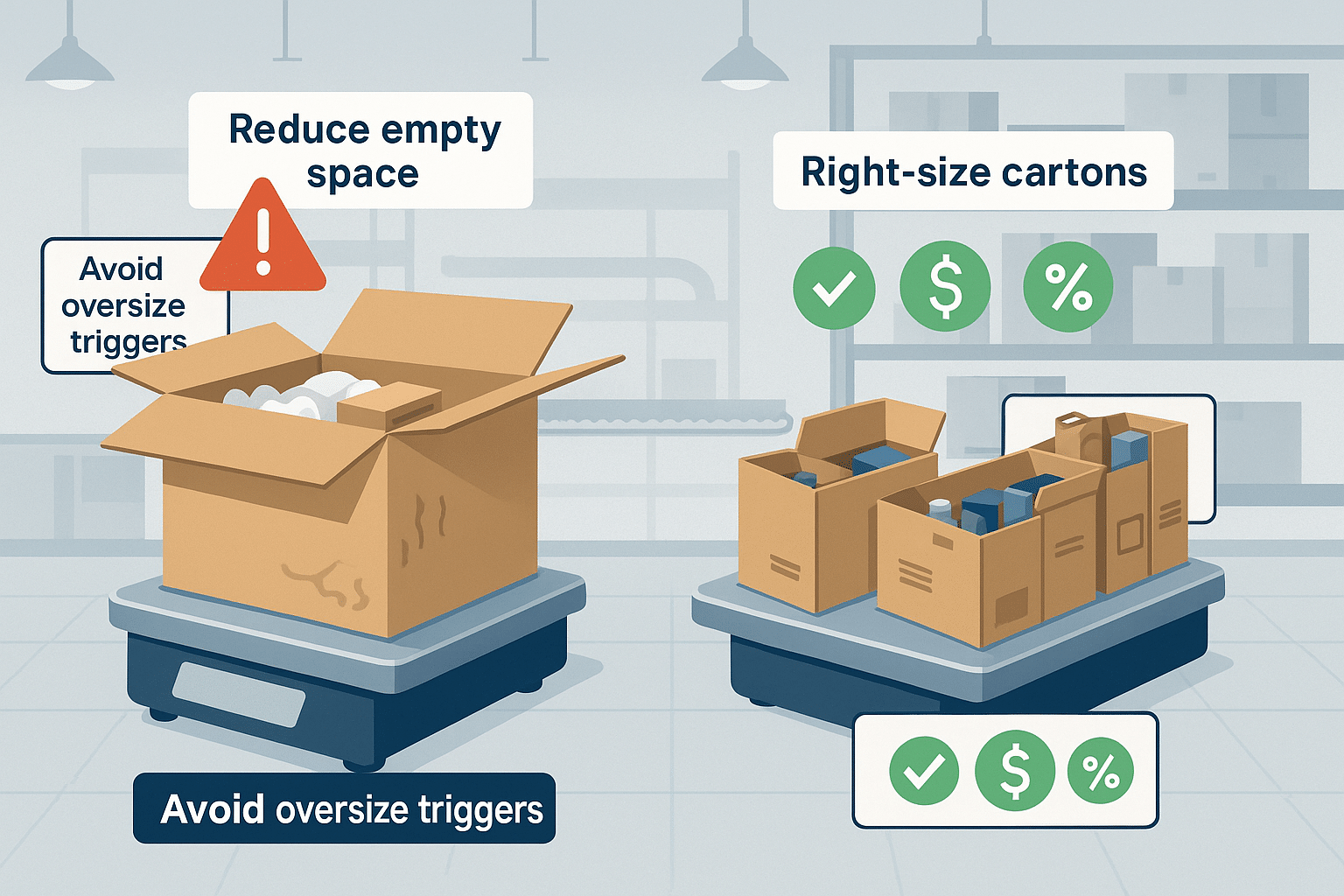
Right-size your cartons
- Avoid “one big box for everything.”
- Create a set of carton sizes that match your most common order profiles.
Reduce empty space
- Excess filler and air lead to bigger external dimensions, which push up dimensional weight.
- Use smarter internal packaging and right-size inserts.
Watch for oversized and overlength triggers
- Many carriers have specific cutoffs where a few extra centimeters in length or girth trigger a large surcharge.
Match Service Level to Real Customer Expectations
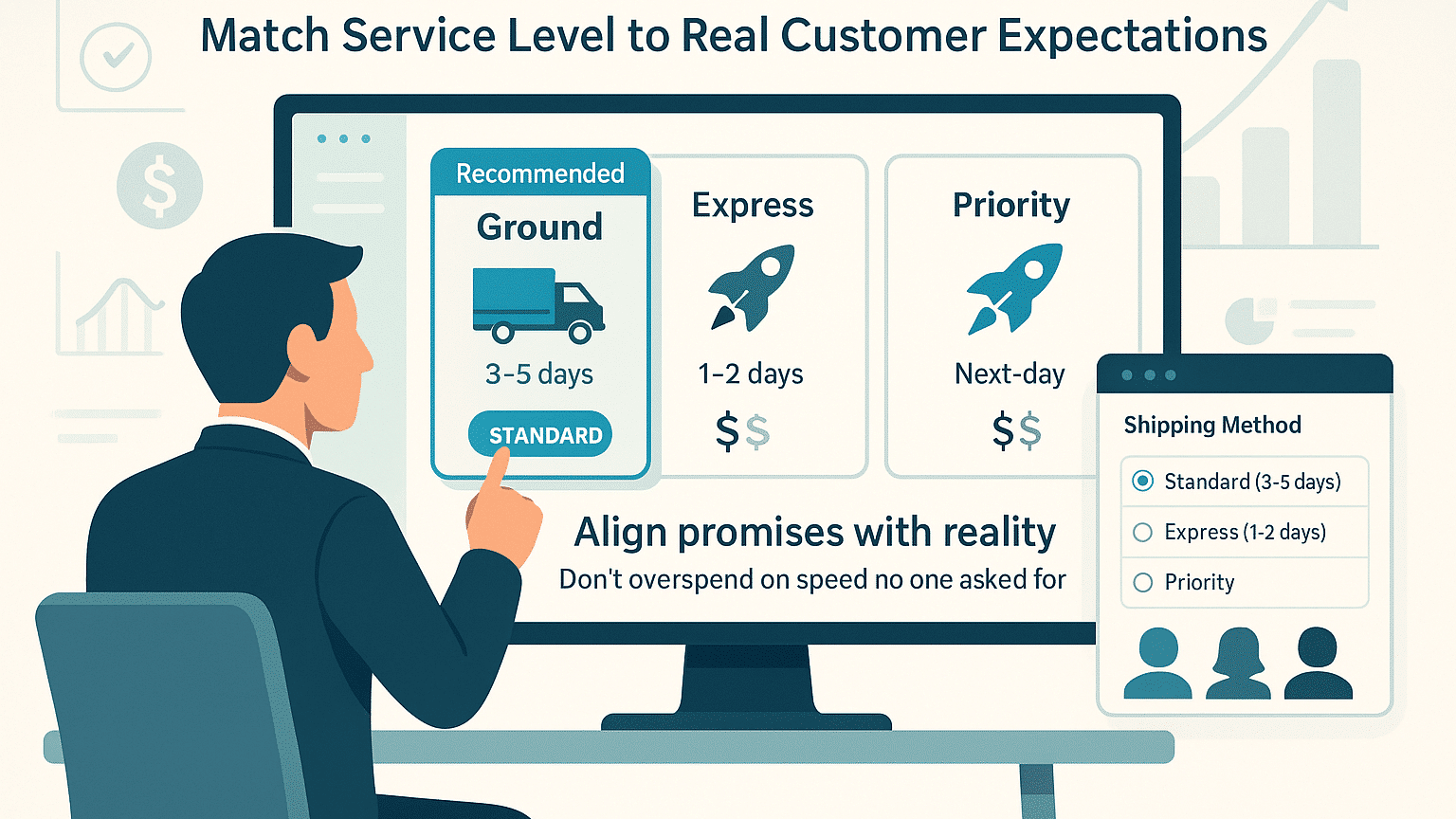
Many businesses overspend on freight simply because they default to faster services than necessary. That might be:
- Always choosing express instead of ground
- Offering “free shipping” but building it on expensive services
- Upgrading everything during busy seasons like Boxing Day
Build a simple service-level framework
- Define your standard:
For example, “Ground within Canada or U.S. where delivery is under X days.” - Offer paid upgrades:
Let customers choose and pay for express/priority shipping if they truly need it. - Align marketing with operations:
Don’t promise “2‑day to everywhere” if that requires you to absorb expensive services in remote or cross-border areas.
Control Cross-Border Costs Between Canada & the U.S.
If you ship across the Canada–U.S. border, costs don’t stop at the freight line item. Poorly managed cross-border processes can lead to:
- Additional brokerage and handling fees
- Unexpected duties and taxes
- Delays, storage charges, and even returns
- Unhappy customers who get surprise charges at delivery
Cross-border cost control basics – U.S Customers and Border Protection
- Standardize your documentation
- Commercial invoices
- Packing lists
- Clear product descriptions and HS codes
- Accurate declared values and country of origin
- Decide on your Incoterms strategy
- Do you want to ship DDP (Delivered Duty Paid) to control the full customer experience?
- Or DAP and let the customer handle duties/taxes?
- Use cross-border specialists
- Some carriers and 3PLs are simply better equipped for consistent cross-border moves.

Coming Next in the Series
In Part 2: The Ultimate Inventory Management Guide for Small Businesses: How to Prevent Stockouts and Overstock in 2026, we’ll shift focus from what happens after the order is placed to what happens before:
- How inventory choices affect freight costs
- How warehousing and order fulfillment impact customer experience
- How CSS’s warehousing, inventory management, and fulfillment services fit into a complete shipping strategy
CLICK DOWN BELOW FOR MORE INFO
